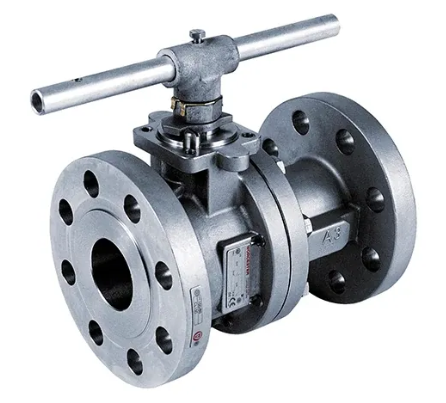
Worcester Reduced Port Flanged

Worcester Reduced Port Flanged

Reduced/regular port ball valves are engineered to meet the latest industry standards, ensuring compatibility and performance across a diverse range of applications. With the flexibility to accommodate various seat and seal combinations, these valves are tailored to meet specific operational requirements. They offer customers a dependable solution with enhanced durability, delivering long service life even in demanding environments. Designed for use across a broad pressure range, these valves provide consistent and reliable performance, making them a versatile choice for industries where precision and reliability are crucial.

Brand: Worcester
Category: Ball
Industries Power: Conventional Steam, Combined Cycle, Concentrated Solar Power (CSP), Biomass & MSW, Geothermal, Chemicals: Basic (Organic & Inorganic), Specialty (Fine & Consumer), Biofuels, Pharmaceutical, Water: Water Management, Wastewater, Agriculture & Irrigation, Flood Control System, Oil & Gas: Downstream Processing, General Industries: Pulp & Paper, Mining, Steel & Primary Metals, Food & Beverage, Corn Wet Milling & Ethanol, Other Industries
Face-to-Face Standard ASME B16.10
Trim Reduced Port
Cv Range 8 to 1,800
Valve Size ½” to 8”
Pressure Class Standard ANSI B16.34
Design Temperature -196°C to 300°C
Type Reduced Port Flanged Floating Ball Valve
Bonnet Standard
Packing Live-loaded Flexible Graphite for Fire-Safe Integrity
Pressure Class Range F51: CL 150, F52: CL 300
Seating Delrin, V-PTFE, Reinforced PTFE, Fluorofill/Polyfill, UHMWPE, PEEK, Metal impregnated with PTFE, Metal impregnated with graphite
End Connections Flanged Connections: ASME B16.5 CL 150 & CL 300
Shut-Off Classification ANSI/FCI 70-2 Class VI
Configurations General Purpose; AMSE B.16.34; Firesafe; Cryogenic; High Integrity; Multiway; EC1935 Food Compliant

Custom built configurations tailored to meet the specific needs of the customer's application.

Bubble-tight shutoff with bi-directional flow ensures maximum process flexibility.

Low operating torques enable the use of compact actuators, reducing both space requirements and operational costs.

Design Standards ASME B16.34: Governs design, material selection, and pressure-temperature ratings for valves.
ASME B16.10: Specifies face-to-face dimensions of flanged valves to ensure compatibility during installation.
ASME B16.5: Governs flange connections, ensuring proper pressure rating and connection integrity.
API 608: Standard for ball valve design, covering durability and operational performance.
ISO 10497: International standard for fire testing of valves to prevent failure during fire conditions.
BS EN 1759-1: European standard for flange connections, particularly for Class 150 and 300 flanges.
Certifications API 607: Certification for fire-safe performance of valves, ensuring resistance during fires.
API 641: Ensures compliance with fugitive emissions standards for environmental protection.
EN 15848: Certifies valve performance in controlling fugitive emissions, which is critical for environmental safety.
NACE MR0175: Ensures material compatibility in sour gas environments, preventing corrosion and degradation.
PED: Pressure Equipment Directive compliance for the safe operation of valves under high pressure in the EU.
SIL 3 Capable: Safety Integrity Level certification indicates high safety-critical systems reliability.
UL, FM: Certifies safety and performance of valves, especially in industrial and commercial systems.
CRN
Quality ISO 9001: International quality management standard ensuring consistent product quality and continuous improvement.
API 598: Standard for valve pressure testing, ensuring leak detection and operational integrity.
MSS SP-55: Establishes surface quality standards for valve castings, ensuring high-quality manufacturing.
ISO 15848: Specifies testing and construction requirements to meet fugitive emissions standards for valve assemblies.